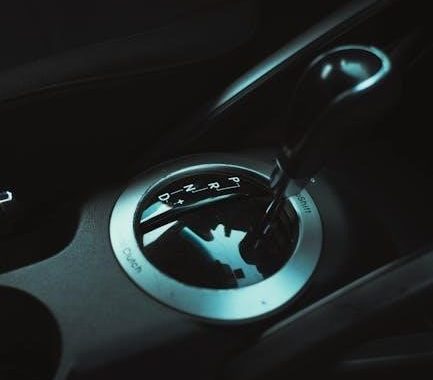
Column manual shifters, offering full control, simplified braking, were prevalent before automatics improved significantly in the late 90s and 2000s.
Historical Context of Column Shifters
Early automotive designs frequently employed column shifters, particularly the “three-on-the-tree” configuration, gaining prominence in the 1930s and continuing through the 1960s. This layout offered a space-saving solution within the vehicle cabin, predating the widespread adoption of floor-mounted shifters.
Initially, column shifters were favored for their simplicity and cost-effectiveness. However, as automatic transmissions gained traction, the demand for manual transmissions—and consequently, column shifters—began to decline. The late 1990s and early 2000s witnessed a turning point; automatics started achieving comparable, and even superior, performance metrics, like 0-60 times, to manual counterparts.

Despite this shift, column shifters maintained a presence in certain American-made vehicles until the early 2000s, representing a nostalgic link to a bygone era of automotive engineering.
Advantages of Column Shifters
Column shifters historically provided distinct advantages, notably offering drivers full control over the vehicle’s operation. This direct mechanical connection translated to a more engaging driving experience, particularly valued before the refinement of automatic transmissions. A key benefit was simplified braking, as the absence of a torque converter in manual systems allowed for more immediate response.
Furthermore, the design freed up floor space, a consideration in earlier vehicle interiors. While requiring more driver focus—necessitating attention to both feel and the shifter pattern—some drivers appreciated the distinct haptic feedback, resembling polystable gear shifters.
The stopping sensation during shifts could aid accuracy, a feature valued by those accustomed to the system.
Disadvantages of Column Shifters
Column shifters, despite their historical appeal, presented several drawbacks. The design demanded significant driver attention, increasing the risk of inadvertently sliding past the intended gear. This was particularly true with simpler “mono I/J” patterns, requiring constant mental mapping of the shifter’s layout.
Reliance on tactile feedback was crucial, as drivers needed to feel the engagement of each gear, adding a layer of complexity. Compared to modern shifters, the haptic cues could be less definitive, potentially leading to shifting errors.
The increased cognitive load could detract from overall driver focus, and the system’s inherent complexity wasn’t universally intuitive, especially for new drivers.
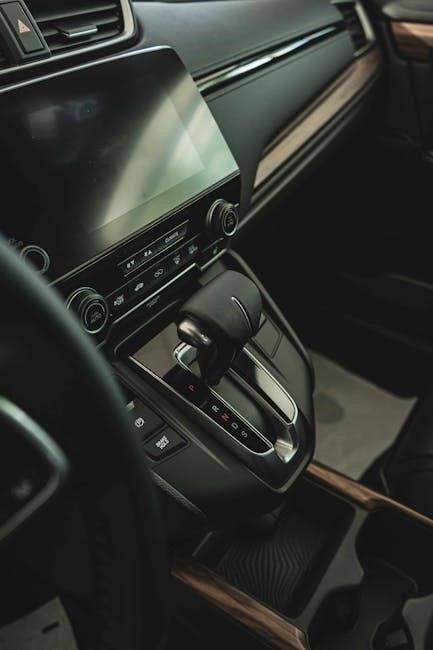
Mechanical Components of a Column Manual Shifter
Column shifters utilize a shift linkage system integrated into the steering column, incorporating a crucial neutral safety switch for operational functionality and driver protection.
Shift Linkage System
The shift linkage system is the core mechanical connection between the column-mounted shifter and the transmission itself. This system translates the driver’s lever movements into gear selections within the gearbox. Early systems often employed simple rods and levers, sometimes susceptible to wear and requiring periodic adjustment to maintain precise shifting.
These linkages needed to be robust enough to withstand the forces applied during gear changes, yet flexible enough to accommodate the vehicle’s chassis flex. Proper adjustment is critical; loose linkages can result in imprecise shifts or even difficulty selecting a gear. Conversely, overly tight linkages can strain the system and lead to premature failure. The design aimed for a direct and positive feel, though often lacking the precision of floor-mounted setups.
Steering Column Integration
Integrating the shifter directly into the steering column presented unique engineering challenges. Designers had to ensure the shifting mechanism didn’t interfere with steering functionality or driver comfort. This often involved careful packaging of components within the column itself, alongside wiring for signals and potentially the horn.
The column needed to be reinforced to handle the stresses imposed by shifting, particularly in older vehicles. Universal joints and bearings were crucial for smooth operation and to prevent binding. The placement of the shifter lever also impacted ergonomics; finding a natural and accessible position was key. This integration, while space-saving, sometimes compromised the direct feel and precision compared to floor-mounted shifters.
Neutral Safety Switch Functionality
Neutral safety switches are critical components in column shifter systems, preventing the engine from starting unless the transmission is in Park or Neutral. This safety feature mitigates accidental vehicle movement during startup, a vital consideration for driver and bystander safety. The switch is mechanically linked to the shifter linkage, ensuring accurate detection of the transmission’s position.
These switches often incorporate multiple contacts for redundancy and may also control other functions, like the transmission lock-out. Failure of the neutral safety switch can prevent starting, or, more dangerously, allow starting in gear. Regular inspection and testing of this switch are essential maintenance procedures for vehicles equipped with column shifters, ensuring continued safe operation.
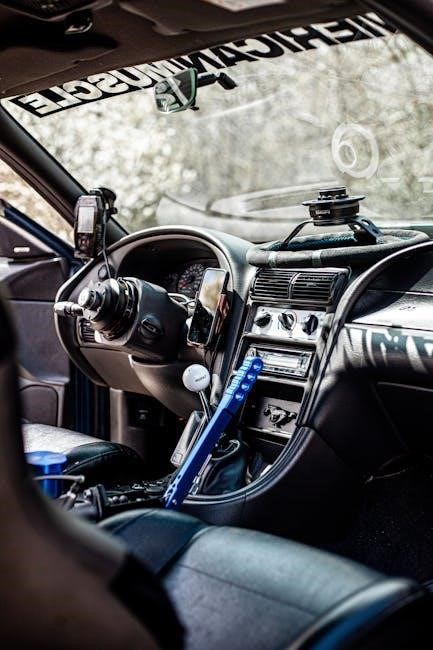
Types of Column Shifters
Column shifters evolved from three-on-the-tree to four-speed configurations, with modern variations emerging, adapting to changing automotive technology and driver preferences.
Three-on-the-Tree Shifters
Three-on-the-tree shifters represent the earliest widespread form of column-mounted manual transmissions. This system, common from the 1930s through the 1960s, featured a single column stalk controlling gear selection with a distinct pattern – typically Reverse, First, and Second on the steering column itself, with Third and Fourth gears accessible by pushing the lever further down and moving it laterally.
Drivers needed to memorize the ‘H’ pattern and rely heavily on tactile feedback, as visual cues were minimal. The risk of mis-shifting was higher, requiring focused attention on feeling the gear engagement. While offering a unique driving experience, these shifters demanded more driver involvement compared to later designs or floor-mounted alternatives. The stopping sensation resembled polystable gear shifters, providing a tactile advantage.
Four-Speed Column Shifters
Four-speed column shifters emerged as an evolution of the three-on-the-tree design, offering an additional gear for improved highway cruising and overall efficiency. These systems retained the column-mounted stalk but incorporated a more complex shift pattern to accommodate the fourth gear. While still relying on tactile feedback and driver memorization of the ‘H’ pattern, the added gear provided a wider range of ratios.
Like their three-speed predecessors, four-speed column shifters demanded driver focus to avoid mis-shifts, particularly when transitioning between gears. The stopping sensation was crucial for confirming engagement. These shifters were prevalent through the 1970s, representing a peak in column-shift manual transmission technology before floor shifters gained dominance, offering full control.
Modern Column Shifter Variations
Modern column shifter variations are exceedingly rare, largely confined to specialized applications or retro-styled vehicles. While true manual column shifters have largely disappeared, some vehicles employ column-mounted levers for electronically controlled automatic transmissions with manual mode. These systems often utilize buttons or a toggle switch for gear selection, rather than a traditional mechanical linkage.
These modern iterations aim to offer a semblance of the classic column-shift feel, but lack the direct mechanical connection and tactile feedback of older designs. The shift experience relies heavily on visual cues and electronic confirmation. Though offering convenience, they don’t replicate the full control of a traditional manual, and automatics have surpassed them in speed and efficiency.
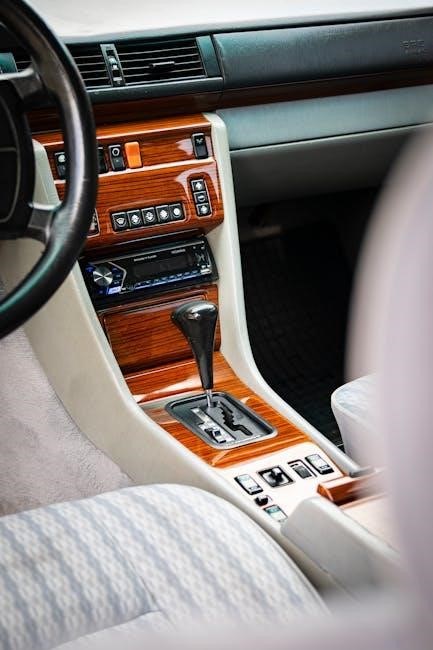
Usability and Ergonomics
Column shifters demanded driver focus on feel and pattern, with mono T stopping sensations resembling polystable gear shifters, reducing sliding errors.
Comparison of Haptic Feedback in Different Shifter Designs
Haptic feedback varied significantly between shifter designs, notably comparing column shifters to more modern counterparts. The “three-on-the-tree” column shift offered a distinct stopping sensation, particularly with the mono T pattern, which some drivers found resembled the feel of polystable gear shifters.
This tactile feedback aided in preventing accidental overshifting, a common concern with simpler mono I/J designs where it was easier to slide past the intended gear. Modern shifters, including those with manual modes in automatics, often rely on more subtle cues, requiring greater driver awareness. The column shifter’s pronounced stopping point provided a clear indication of gear engagement, potentially reducing shifting errors and enhancing driver confidence, especially in older vehicles.
Impact of Visual Cues on Shifting Accuracy
Visual cues played a crucial role in the accurate operation of column manual shifters, demanding drivers maintain a mental map of the shift pattern. Unlike modern shifters with defined gates, the column shifter required constant visual confirmation of the selected gear. The driver needed to actively remember the shifter’s layout – whether a three-on-the-tree or four-speed configuration – to avoid mis-shifts.
The absence of strong haptic feedback in some designs further emphasized the importance of visual awareness. Drivers had to focus on the shifter’s position relative to the steering column, increasing cognitive load. This reliance on visual memory contrasted with more intuitive shifter designs, highlighting the unique challenges presented by column-mounted manual transmissions.
Driver Focus and Shifting Errors
Column shifters demanded a higher degree of driver concentration due to the less intuitive shifting experience. The risk of “sliding past” the intended gear, particularly with simpler I/J patterns, increased the potential for errors. Drivers needed to simultaneously manage steering, braking, and gear selection, placing a significant cognitive burden on the operator.
The lack of robust haptic feedback meant drivers relied heavily on feel and memory, making mis-shifts more common. Maintaining awareness of the shifter pattern was paramount, and distractions could easily lead to incorrect gear engagement. This contrasts with modern transmissions, where clearer feedback minimizes such errors, emphasizing the need for heightened focus when operating a column manual shifter.
Performance Considerations
Older cars with manuals were faster, but automatics improved significantly in the late 90s-2000s, eventually surpassing manuals in speed and efficiency.
Manual vs. Automatic with Manual Mode: Speed and Efficiency
Historically, a manual gearbox, like those paired with column shifters, offered superior speed and efficiency compared to automatics. However, this dynamic shifted considerably towards the late 1990s and into the 2000s. Advancements in automatic transmission technology began to close, and then surpass, the performance gap.
Initially, the advantage of a manual lay in its direct mechanical connection, minimizing power loss. Yet, modern automatics, particularly those with manual modes (paddle shifters or selectable gear ranges), implemented sophisticated control systems and faster shift times. These improvements allowed automatics to achieve comparable, and often better, acceleration figures – specifically in 0-60 mph times – than their manual counterparts.
The subjective experience also plays a role; the engagement of a clutch and precise shifting in a manual provides a different driving feel, but doesn’t necessarily translate to quantifiable speed advantages in contemporary vehicles.
Evolution of Automatic Transmission Performance (Late 90s ⎼ 2000s)
The period between the late 1990s and the 2000s witnessed a remarkable evolution in automatic transmission technology, directly impacting the relevance of column manual shifters. Early automatics suffered from inefficiencies and slower shift speeds, placing them at a disadvantage against manual transmissions.
However, manufacturers began incorporating features like more sophisticated electronic control units (ECUs), improved torque converters, and increased gear ratios. These advancements allowed automatics to optimize shift points for both performance and fuel economy. A handful of automatics started demonstrating 0-60 times competitive with manuals.
Furthermore, the introduction of manual shift modes – initially as gated shifters and later as paddle-shift systems – provided drivers with greater control, mimicking the experience of a manual gearbox. This evolution ultimately contributed to the decline in demand for column-mounted manual shifters.
Impact on 0-60 Times
Historically, vehicles equipped with column manual shifters often boasted quicker 0-60 times compared to their automatic counterparts. This advantage stemmed from the direct mechanical connection between the engine and wheels, minimizing power loss during gear changes. However, this dynamic shifted dramatically in the late 1990s and early 2000s.
As automatic transmission technology advanced, incorporating features like optimized shift programming and improved torque converters, automatics began to close – and in some instances, surpass – the 0-60 times of manual vehicles. While initially a limited number of automatics achieved this, the trend accelerated.
This improvement in automatic performance diminished a key selling point of manual transmissions, including those utilizing column shifters, contributing to their eventual decline in popularity and production. The gap continued to widen as automatics became more refined.
Shift Knob Design and Materials
Shift knob shapes are determined by design and ergonomics, then reviewed by regulatory groups, ensuring production vehicles meet specific engineering and safety standards.
Plain Ball Shifter Preference
Many drivers express a strong preference for the simplicity of a plain ball shifter, particularly those with decades of manual transmission experience. This preference isn’t merely nostalgic; it stems from a direct connection and tactile feedback. A smooth, round ball allows for intuitive hand placement and a clear sense of gear selection without unnecessary ornamentation.
The design prioritizes function over form, offering a consistent feel regardless of hand size or grip style. Experienced drivers often find that complex knob shapes introduce unwanted variables, potentially hindering quick and precise shifts. Furthermore, the plain ball shifter’s design is often favored due to its inherent simplicity and ease of manufacturing, contributing to its enduring appeal across generations of manual transmission enthusiasts.
Ergonomic Considerations in Shift Knob Design
Ergonomic considerations are paramount in shift knob design, involving input from dedicated ergonomics groups within automotive design offices. These teams assess how the knob’s shape and surface finish interact with the driver’s hand during gear changes. The goal is to minimize strain and maximize comfort, promoting efficient and accurate shifting.
Factors like knob weight, diameter, and texture are carefully evaluated to ensure a secure and natural grip. The design process isn’t solely driven by aesthetics; it’s a collaborative effort between designers, engineers, and regulatory bodies. Finalized shapes undergo review to ensure they meet safety standards and don’t introduce unintended hazards, balancing driver experience with regulatory compliance.
Regulatory Review of Shift Knob Shapes
Shift knob shapes undergo rigorous regulatory review post-design finalization by the design office. This process isn’t merely cosmetic; it’s a critical safety assessment. Automotive regulatory groups scrutinize designs to prevent potential hazards arising from sharp edges, excessive weight, or configurations that could impede driver control.
The review ensures knobs won’t cause injury during operation or in the event of a collision. Engineering teams translate the approved design into a manufacturable product, adhering to strict tolerances and material specifications. This multi-layered approach—design, ergonomics input, and regulatory approval—guarantees that shift knobs meet both performance and safety standards, protecting drivers and passengers alike.
Maintenance and Repair
Column shifters can experience common issues, often requiring shift linkage adjustments or complete shifter replacement to restore smooth, accurate gear selection and operation.
Common Issues with Column Shifters
Column manual shifters, while offering a unique driving experience, are prone to specific mechanical problems over time. A frequent issue involves wear and looseness within the shift linkage system, leading to imprecise shifting and difficulty selecting the desired gear. This can manifest as sloppy movements or a feeling of vagueness when attempting to change gears.
Another common concern is the deterioration of the neutral safety switch, which prevents the engine from starting unless the shifter is firmly in Park or Neutral. A faulty switch can cause starting problems or allow the vehicle to start in gear, posing a safety hazard. Internal wear within the shifter mechanism itself, including detents and springs, can also contribute to shifting difficulties. Finally, corrosion and grime accumulation can impede smooth operation, requiring cleaning and lubrication.
Adjusting Shift Linkage
Adjusting the shift linkage on a column manual shifter is crucial for restoring precise gear selection. The process typically involves locating the linkage connections, usually under the vehicle near the transmission. Begin by disconnecting the linkage at either the transmission or the shifter column, depending on the vehicle’s design.
Carefully inspect all joints and bushings for wear or damage, replacing them if necessary. Reconnect the linkage, ensuring proper alignment. Fine-tuning often requires adjusting the linkage rods using threaded sections or adjustment screws. The goal is to achieve accurate engagement in each gear, eliminating any binding or looseness. A test drive after each adjustment is essential to verify correct operation and ensure smooth, reliable shifting performance.
Replacing a Column Shifter
Replacing a column shifter involves several steps, demanding careful attention to detail. Begin by disconnecting the battery to prevent electrical issues. Remove any trim panels surrounding the steering column to access the shifter mechanism. Disconnect the shift linkage from the shifter, noting its configuration for reassembly.
Unbolt the shifter assembly from the steering column, carefully maneuvering it out of position. Install the new shifter, ensuring proper alignment with the steering column and shift linkage. Reconnect the linkage, verifying smooth operation through all gear positions. Reattach the trim panels and reconnect the battery. A final test drive confirms correct functionality and eliminates any binding or imprecise shifting.
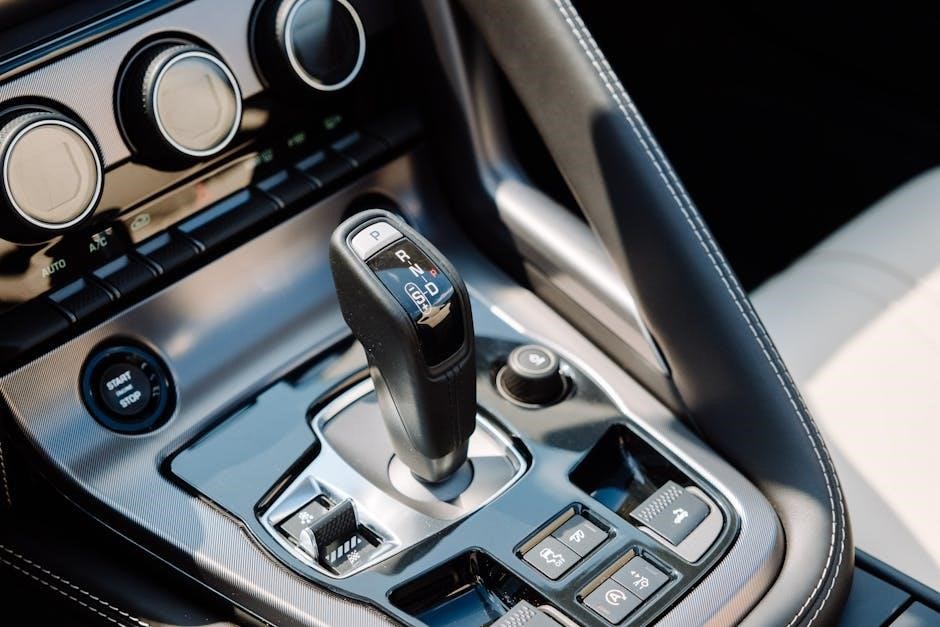
The Last Column Shift Manual Cars
Final American-made column shift manual vehicles are now highly collectible, discontinued due to the rise of automatic transmissions and evolving driver preferences.
Identifying the Final American-Made Column Shift Manual Vehicles
Pinpointing the absolute last American-made vehicle offered with a column-shift manual transmission proves surprisingly complex, shrouded in production variations and limited records. However, the 1965 Chevrolet Corvair and 1965 Ford Falcon frequently appear as strong contenders for this distinction. These models represent the twilight of this configuration, as manufacturers rapidly transitioned towards floor-mounted shifters and, ultimately, automatic transmissions.
The 1964 and 1965 Buick Skylark also offered a column shift manual, but production numbers dwindled quickly. Determining the very last one requires tracing individual vehicle identification numbers (VINs), a task complicated by incomplete data. These final examples are now prized by collectors, representing a unique and rapidly disappearing piece of automotive history, embodying a simpler era of driving engagement.
Reasons for Discontinuation
Several converging factors led to the decline and eventual discontinuation of column-shift manual transmissions. The rising popularity of automatic transmissions, offering increased convenience, played a significant role. Simultaneously, automatic transmission performance dramatically improved in the late 1990s and 2000s, even surpassing some manuals in acceleration and efficiency.
Furthermore, concerns regarding driver focus and shifting errors, particularly the risk of inadvertently selecting the wrong gear, contributed to their demise. Ergonomic considerations also favored floor-mounted shifters, offering more intuitive haptic feedback. Regulatory pressures and evolving consumer preferences ultimately sealed the fate of the column shifter, prioritizing ease of use and performance over the traditional driving experience.
Legacy and Collectibility
Despite their disappearance from new vehicles, column-shift manual transmissions hold a unique place in automotive history, evoking nostalgia for a simpler era of driving. The final American-made column shift manual vehicles are now highly sought after by collectors and enthusiasts. Their rarity and distinct driving experience contribute to their increasing value.
These vehicles represent a tangible link to a time when drivers were more directly engaged with the mechanics of their cars. The legacy extends beyond mere collectibility; they symbolize a specific automotive design philosophy. Today, owning a column-shift manual car is often seen as a statement, celebrating a bygone era and a more connected driving experience, ensuring their continued appreciation.