moen genta faucet ws84760srn manual

Moen Genta Faucet WS84760SRN: A Comprehensive Guide

This detailed resource provides everything you need regarding the Moen Genta WS84760SRN, encompassing installation, troubleshooting, and maintenance for optimal performance and longevity․

Overview of the Moen Genta Series

The Moen Genta Series represents a contemporary design aesthetic for the bathroom, characterized by its sleek, curved edges and substantial build quality․ This collection aims to bring a modern, yet inviting feel to any bathroom space․ The Genta suite isn’t just about looks; it’s engineered for durability and reliable performance, utilizing quality materials in its construction․

Specifically, the Genta faucets, like the WS84760SRN model, are designed for single-hole installation, offering a streamlined appearance․ Moen emphasizes ease of use with its single-handle operation, allowing for effortless control of both water temperature and flow․ The series caters to those seeking a balance between style and functionality, providing a sophisticated upgrade to daily bathroom routines․

Moen provides comprehensive support, including readily available installation guides (INS10365A & INS10554) and customer service, ensuring a smooth experience from purchase to installation and beyond․
Key Features of the WS84760SRN Model

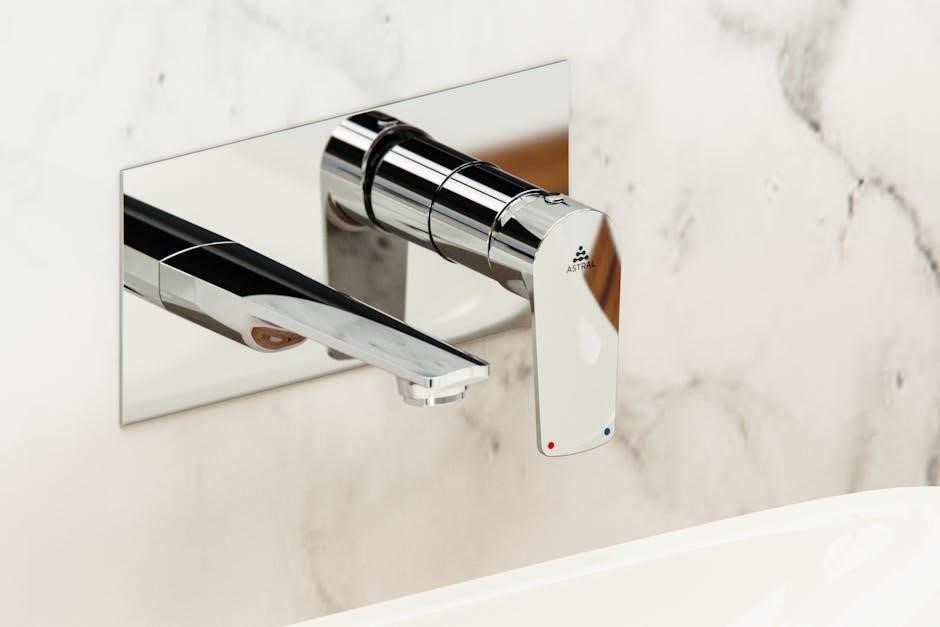
The Moen Genta WS84760SRN bathroom faucet is a single-handle model designed for single-hole installation, offering a clean and modern look․ A standout feature is its 1;2 GPM (gallons per minute) flow rate, balancing water conservation with adequate pressure for everyday use․ The faucet boasts a durable metal shell construction, ensuring longevity and resistance to wear and tear․

Its Spot Resist Brushed Nickel finish is a key selling point, resisting fingerprints and water spots to maintain a pristine appearance․ The single-lever handle provides intuitive control over water temperature and volume․ Moen prioritizes user convenience, offering detailed installation guides (INS10365A & INS10554) and readily accessible customer support via phone (1-800-BUY-MOEN) and their website (www․moen․com)․

This model, identified by SKU VORG7460876 and MPN WS84760SRN, is a practical and stylish addition to any bathroom․

Spot Resist Brushed Nickel Finish

The Moen Genta WS84760SRN features a distinctive Spot Resist Brushed Nickel finish, engineered to minimize water spots and fingerprints․ This specialized coating isn’t simply a plating; it’s a durable layer designed to maintain a clean, pristine appearance with minimal effort․ Unlike traditional chrome finishes, the brushed nickel provides a warmer, more subtle aesthetic that complements a wide range of bathroom décor styles․

This finish significantly reduces the frequency of cleaning required to keep the faucet looking its best․ While regular cleaning is still recommended, the Spot Resist technology offers a practical advantage for busy households․ The finish is applied to a robust metal shell, ensuring both durability and a lasting, attractive appearance․

Moen’s commitment to quality extends to this finish, providing a long-term solution for a beautiful bathroom fixture․

Installation Process

Installing the Moen Genta WS84760SRN bathroom faucet is a manageable DIY project for those with basic plumbing skills․ However, carefully following the provided installation guides – INS10365A and INS10554 – is crucial for a successful outcome․ Moen strongly recommends contacting them directly for assistance, missing parts, or clarification before beginning․ Their customer support is available at 1-800-BUY-MOEN (USA) or via their website, www․moen․com․

The process involves removing the old faucet, preparing the sink surface, and carefully connecting the new faucet according to the step-by-step instructions․ Proper sealing of connections is vital to prevent leaks․ Ensure the water supply is shut off before disconnecting any existing plumbing․

Detailed diagrams within the guides illustrate each stage, making the installation process clear and concise․

Tools Required for Installation

Before commencing the installation of your Moen Genta WS84760SRN faucet, gathering the necessary tools is essential for a smooth and efficient process․ While the specific requirements may vary slightly depending on your existing plumbing, a standard toolkit will generally suffice․

You will need an adjustable wrench for tightening connections, a basin wrench to access hard-to-reach nuts under the sink, and a Phillips head screwdriver․ A flathead screwdriver may also be useful․ Plumber’s putty is crucial for sealing around the faucet base, and Teflon tape is recommended for threaded connections to prevent leaks․

Additionally, a bucket and towels are necessary to catch any residual water, and a flashlight will aid visibility in dimly lit areas under the sink․ Safety glasses are always recommended to protect your eyes․

Step-by-Step Installation Instructions

Begin by shutting off the water supply to your existing faucet․ Disconnect the old faucet’s water supply lines and remove the old faucet from the sink․ Clean the sink surface thoroughly before applying a bead of plumber’s putty around the base where the new Moen Genta WS84760SRN will sit․

Carefully insert the faucet into the sink opening, ensuring it’s properly aligned․ From underneath the sink, secure the faucet with the mounting hardware provided, tightening it firmly but not excessively․ Connect the water supply lines to the faucet’s tailpieces, using Teflon tape on the threads for a watertight seal․

Finally, turn the water supply back on slowly and check for any leaks․ If leaks are present, tighten the connections further․ Test the faucet’s operation, ensuring both hot and cold water flow correctly․

Connecting Water Supply Lines

Before connecting, ensure the water supply is completely shut off․ Identify the hot and cold water supply lines – typically, red indicates hot and blue indicates cold․ Apply Teflon tape clockwise around the threads of the faucet’s tailpieces to create a watertight seal․ Carefully attach the water supply lines to the tailpieces, hand-tightening initially․

Use adjustable wrenches to gently tighten the connections further, avoiding over-tightening which could damage the faucet or supply lines․ Double-check that the connections are secure and properly aligned․ Slowly turn the water supply back on, monitoring closely for any leaks at the connection points․

If leaks occur, immediately shut off the water and re-tighten the connections․ A drip can indicate a loose connection or damaged supply line; inspect carefully․

Understanding the 1․2 GPM Flow Rate

The Moen Genta WS84760SRN faucet features a 1․2 gallons per minute (GPM) flow rate․ This is a water-efficient design, adhering to modern standards for water conservation without sacrificing adequate water pressure for everyday tasks like handwashing and teeth brushing․ Lower GPM rates reduce water consumption, leading to lower utility bills and a smaller environmental footprint․

While 1․2 GPM is considered efficient, some users accustomed to higher flow rates might perceive a slight difference․ However, Moen’s engineering ensures a satisfying and functional water stream․ The aerator integrated into the faucet mixes air with the water, creating a fuller, more pressurized feel despite the reduced volume․

This flow rate balances performance and responsibility, offering a sustainable solution for your bathroom․

Single-Handle Operation Explained

The Moen Genta WS84760SRN faucet utilizes a straightforward single-handle design for effortless control of both water temperature and flow․ Moving the handle up and down adjusts the water volume, while shifting it left and right controls the temperature․ This intuitive operation allows for quick and precise adjustments with just one hand․

The handle’s smooth range of motion is a key feature, providing a comfortable and responsive user experience․ The design minimizes the effort needed to find your desired water temperature and pressure․ This is particularly convenient when hands are full or when quick adjustments are needed․

Moen prioritizes user-friendly functionality, and the single-handle operation of the Genta faucet exemplifies this commitment․

Faucet Dimensions and Specifications

The Moen Genta WS84760SRN bathroom faucet is designed for single-hole configurations․ While precise dimensions can vary slightly, the overall height typically ranges around 8․19 inches, providing ample clearance for comfortable handwashing․ The spout reach, measuring from the faucet base to the water stream, is approximately 5․12 inches․

The faucet boasts a 1․2 gallons per minute (GPM) flow rate, balancing water conservation with sufficient pressure․ Constructed with a durable metal shell, the Genta ensures long-lasting reliability․ The connection size is a standard ½-inch IPS, facilitating easy integration with existing plumbing․

The Spot Resist Brushed Nickel finish not only enhances aesthetics but also resists fingerprints and water spots, maintaining a pristine appearance․ Detailed specifications are available in installation guides INS10365A & INS10554․

Maintenance and Cleaning

To preserve the beauty and functionality of your Moen Genta WS84760SRN faucet, regular maintenance is key․ Daily wiping with a soft, damp cloth removes water spots and debris․ Avoid abrasive cleaners, as they can damage the Spot Resist Brushed Nickel finish․ For tougher stains, use a mild soap solution and rinse thoroughly․

Recommended Cleaning Products: Moen recommends their own cleaning products designed specifically for their finishes, ensuring no harm comes to the faucet’s protective layers․ Periodically check the aerator for sediment buildup and clean as needed․

Preventative Maintenance Tips: Inspect supply lines for leaks and tighten connections if necessary․ Avoiding Common Issues: Promptly address any drips or unusual noises to prevent more significant problems․ Refer to installation guides INS10365A & INS10554 for detailed care instructions․

Recommended Cleaning Products

Maintaining the pristine look of your Moen Genta WS84760SRN faucet requires the right cleaning agents․ Moen specifically formulates cleaning products designed to protect and enhance their finishes, including the Spot Resist Brushed Nickel․ These are the safest and most effective options for regular cleaning․

Avoid harsh chemicals like bleach, ammonia, or abrasive cleaners, as these can strip the finish and cause permanent damage․ Mild dish soap diluted in warm water is suitable for daily cleaning to remove water spots and grime․ For tougher buildup, consider a dedicated stainless steel cleaner, always testing in an inconspicuous area first․

Microfiber cloths are ideal for cleaning, as they won’t scratch the surface․ Rinse thoroughly after cleaning and dry with a clean, soft towel to prevent watermarks․ Refer to guides INS10365A & INS10554 for further details on product compatibility․

Preventative Maintenance Tips

Proactive care significantly extends the life of your Moen Genta WS84760SRN faucet․ Regularly inspect the faucet for leaks around the base, handle, and supply lines․ Tighten connections as needed, but avoid over-tightening․ Periodically check the aerator for sediment buildup; unscrew and rinse it under running water to maintain optimal flow․

Wipe down the faucet after each use to prevent water spots and mineral deposits, especially if you have hard water․ Avoid placing heavy objects on the faucet handle, as this can damage internal components․ Following the cleaning recommendations – avoiding abrasive cleaners – is crucial for preserving the Spot Resist Brushed Nickel finish․

Consult installation guides INS10365A & INS10554 for diagrams and reminders․ Consistent, gentle maintenance prevents larger issues and ensures years of reliable performance․

Avoiding Common Issues

Many problems with the Moen Genta WS84760SRN faucet are preventable with mindful use․ Avoid applying excessive force to the handle, which can strain internal mechanisms․ Be cautious about what goes down the drain; hair, soap scum, and debris can clog the aerator and reduce water pressure․ Regularly flushing the supply lines can also prevent buildup․

Hard water can lead to mineral deposits, so consider a water softener if you live in an area with hard water․ Always use recommended cleaning products – abrasive cleaners will damage the Spot Resist Brushed Nickel finish․ Refer to installation guides INS10365A & INS10554 for proper installation, as incorrect installation is a frequent cause of leaks․

Promptly address any drips or leaks to prevent further damage and potential water waste․ Consistent attention to these details will ensure long-lasting, trouble-free operation․

Troubleshooting Common Problems

If you encounter issues with your Moen Genta WS84760SRN faucet, start with simple checks․ Low water pressure often stems from a clogged aerator – unscrew and clean it thoroughly․ Check supply lines for kinks or obstructions․ For leaking faucets, inspect connections for tightness; a worn-out O-ring might require replacement․

Handle operation difficulties could indicate sediment buildup within the cartridge; Try removing and cleaning the cartridge, or consider replacing it․ Always shut off the water supply before disassembling any faucet components․ Refer to the installation guides (INS10365A & INS10554) for diagrams and detailed instructions․

If problems persist, don’t hesitate to contact Moen customer support at 1-800-BUY-MOEN for assistance․ Attempting complex repairs without proper knowledge can worsen the issue․

Low Water Pressure Issues

Addressing low water pressure with your Moen Genta WS84760SRN begins with the simplest solutions․ The most frequent cause is a clogged aerator․ Unscrew the aerator at the faucet’s tip and thoroughly rinse it to remove any sediment or debris․ Inspect the water supply lines for any kinks or bends that might restrict flow․

Ensure the shut-off valves under the sink are fully open․ If the issue persists, check for mineral buildup within the faucet cartridge; cleaning or replacing the cartridge may be necessary․ Refer to installation guides INS10365A & INS10554 for detailed disassembly instructions․

Low pressure affecting all faucets suggests a broader plumbing issue, requiring professional attention․ Contact a plumber to assess your home’s water supply․

Leaking Faucet Troubleshooting

A leaking Moen Genta WS84760SRN faucet often stems from a worn-out cartridge, O-rings, or seals․ Begin by shutting off the water supply․ Disassemble the faucet, carefully noting the order of parts – referencing installation guides INS10365A or INS10554 is highly recommended․ Inspect the cartridge for cracks or damage; replacement is usually the best course of action․

Examine the O-rings and seals for wear and tear, replacing them if necessary․ Ensure all connections are tightened securely, but avoid over-tightening, which can cause further damage․ A leak from the base of the faucet might indicate a loose mounting nut․

If the leak persists after these steps, contact Moen customer support at 1-800-BUY-MOEN for assistance or to order replacement parts․

Handle Operation Difficulties

If you experience stiffness or difficulty moving the single handle on your Moen Genta WS84760SRN faucet, the cartridge is the most likely culprit․ Mineral buildup can restrict its movement, or the cartridge itself may be failing․ Begin by attempting to gently work the handle back and forth to loosen any potential obstructions․

If this doesn’t resolve the issue, shut off the water supply and disassemble the faucet, again consulting installation guides INS10365A or INS10554 for guidance․ Inspect the cartridge for corrosion or damage․ Lubricating the cartridge with a plumber’s grease (silicone-based) during reassembly can improve operation․

If the handle remains difficult to move, replacement of the cartridge is recommended․ For further assistance, contact Moen customer support at 1-800-BUY-MOEN․

Warranty Information

Moen extends a limited lifetime warranty on the WS84760SRN Genta faucet to the original purchaser․ This warranty covers defects in materials and workmanship under normal use․ The “lifetime” coverage refers to the duration of the original purchaser’s ownership or occupancy of the property where the faucet is installed․

This warranty does not cover damage resulting from improper installation, misuse, abuse, accidents, cleaning with abrasive products, or normal wear and tear․ For warranty claims, proof of purchase is required․ Moen reserves the right to repair or replace the defective product, at their discretion․

To initiate a warranty claim, contact Moen customer support at 1-800-BUY-MOEN․ Detailed warranty information can also be found on the official Moen website, www․moen․com․

Contacting Moen Customer Support

For immediate assistance with your Moen Genta WS84760SRN faucet, Moen offers several convenient contact options․ You can reach their dedicated customer support team by phone at 1-800-BUY-MOEN (1-800-289-6636)․ Their representatives are available Monday through Friday, from 8:00 AM to 7:00 PM Eastern Time, and on Saturdays from 9:00 AM to 3:00 PM Eastern Time․

Alternatively, Moen provides extensive support through their official website, www․moen․com․ The website features a comprehensive FAQ section, downloadable manuals (including INS10365A & INS10554), and a contact form for submitting inquiries․ Live chat support may also be available during business hours․

When contacting support, have your faucet’s model number (WS84760SRN) and date of purchase readily available to expedite the process․

Finding Replacement Parts

Maintaining your Moen Genta WS84760SRN faucet is simplified by Moen’s readily available replacement parts․ The most efficient way to locate specific components is through the official Moen website, www․moen․com․ Their online parts catalog allows you to search by model number (WS84760SRN) or browse through detailed diagrams of the faucet assembly․

Alternatively, many hardware retailers and plumbing supply stores carry a selection of Moen replacement parts․ When purchasing from a retailer, it’s helpful to have the original part number, if possible, or a clear description of the component you need․

Ensure the replacement part is specifically designed for the Genta series to guarantee compatibility and proper function․ Moen prioritizes making repairs accessible, extending the life of your faucet․

Installation Guide Reference (INS10365A & INS10554)

Moen provides comprehensive installation guides specifically for the Genta series, including the WS84760SRN model․ Two key documents are referenced: INS10365A and INS10554․ These guides offer detailed, step-by-step instructions, accompanied by illustrative diagrams, to ensure a smooth and accurate installation process․

Both guides are available for download directly from the Moen website (www․moen․com) in a PDF format․ They cover everything from preparing the sink to connecting the water supply lines and final testing․ Note that different finishes or slight variations within the Genta series might utilize one guide over the other․

Always consult the appropriate guide for your specific faucet configuration․ Moen strongly encourages referencing these guides before beginning installation and provides customer support contact information within․

Compatibility with Different Sink Types

The Moen Genta WS84760SRN faucet is designed as a single-hole installation, making it broadly compatible with a variety of bathroom sink configurations․ However, certain sink types may require additional components or considerations for a secure and leak-proof fit․

It’s generally suitable for standard countertop sinks with a single pre-drilled faucet hole․ For sinks with multiple holes, a deck plate (escutcheon) might be necessary to cover unused openings, ensuring a clean aesthetic and preventing water damage․ Compatibility also extends to vessel sinks, provided the faucet’s height and reach are appropriate․

Always verify the sink’s hole size and depth before purchasing․ Moen’s installation guides (INS10365A & INS10554) offer guidance on adapting the faucet to different sink setups․

Moen Genta Faucet Variations

The Moen Genta series offers several variations beyond the WS84760SRN model, catering to diverse aesthetic preferences and bathroom designs․ While sharing the signature curved edges and contemporary style, these faucets differ primarily in finish and included accessories․

A prominent alternative is the Genta faucet available in Matte Black, offering a bold and modern look․ Some configurations include an integrated towel ring, providing added convenience․ The core functionality – single-handle operation and a 1․2 GPM flow rate – remains consistent across most Genta models․

It’s crucial to reference the specific model number when ordering replacement parts or consulting installation guides (INS10365A & INS10554) to ensure compatibility․ Moen’s website details all available Genta variations and their respective specifications․

Online Resources and Support (Moen Website)

Moen’s official website, www․moen․com, serves as a comprehensive hub for all Genta faucet support needs․ Users can readily access digital copies of installation guides, including INS10365A and INS10554, offering step-by-step instructions and visual aids․ The site also features detailed product specifications for the WS84760SRN and other Genta variations․

A robust FAQ section addresses common questions regarding installation, maintenance, and troubleshooting․ Furthermore, Moen provides access to a library of helpful videos demonstrating proper installation techniques and preventative maintenance procedures․

For personalized assistance, Moen offers direct customer support via phone (1-800-BUY-MOEN) during business hours (Mon-Fri 8 AM ⸺ 7 PM ET, Sat 9 AM ౼ 3 PM ET)․ The website’s contact form allows for submitting inquiries and receiving prompt responses from Moen’s support team․

Safety Precautions During Installation

Prior to commencing installation of your Moen Genta WS84760SRN faucet, always shut off the water supply to prevent potential flooding and water damage․ Wear appropriate safety glasses to protect your eyes from debris during the process․ Ensure the work area is well-lit and free from obstructions․

Exercise caution when handling tools, following manufacturer’s instructions for safe operation․ Avoid over-tightening connections, as this can damage the faucet or plumbing․ If you are unfamiliar with plumbing procedures, it is strongly recommended to consult a qualified professional․

Be mindful of hot surfaces if working near existing hot water lines․ Properly dispose of all packaging materials and leftover components after installation․ Review the complete installation guide (INS10365A & INS10554) for detailed safety guidelines․


jurassic world evolution 2 trophy guide

Jurassic World Evolution 2 Trophy Guide: A Comprehensive Plan

Embark on a thrilling journey with this guide, detailing all 45 trophies, including the platinum, requiring roughly 83 hours of dedicated gameplay!

Jurassic World Evolution 2’s trophy system presents a substantial challenge for completionists, boasting a total of 45 trophies across the base game, with additional achievements introduced through its four DLC packs. The journey to platinum requires dedication, estimated around 83 hours, encompassing campaign mastery, sandbox perfection, and overcoming unique challenges.

Players will encounter a diverse range of objectives, from completing campaign scenarios on the punishing Jurassic difficulty to meticulously managing park ratings and unlocking every dinosaur species. The system rewards both strategic park building and skillful dinosaur management, demanding a comprehensive understanding of the game’s mechanics.

Platinum Trophy Overview

Achieving the coveted Platinum Trophy in Jurassic World Evolution 2 is a significant undertaking, demanding complete mastery of the game’s multifaceted systems. It necessitates finishing every campaign scenario on the notoriously difficult Jurassic setting, showcasing exceptional strategic planning and adaptability. Beyond the campaign, players must attain 100% game completion, a feat requiring the unlocking of all dinosaur species and the maximization of park ratings across all modes.

This platinum isn’t simply about time investment; it’s about demonstrating a thorough understanding of dinosaur welfare, guest satisfaction, and financial stability. Prepare for a lengthy, yet rewarding, pursuit!

Estimated Platinum Difficulty and Time

The Platinum Trophy for Jurassic World Evolution 2 is considered a challenging endeavor, landing around a 7/10 in difficulty. Expect a substantial time commitment, with most players reporting an estimated completion time of approximately 83 hours. This duration accounts for the demanding campaign scenarios, extensive dinosaur collection, and meticulous park management required for 100% completion.

DLC content will add to this timeframe, potentially extending the platinum run significantly. Patience, strategic planning, and a willingness to learn from failures are crucial for success.

Campaign Mode Trophies

Successfully navigating the campaign demands mastering each scenario, especially on Jurassic Difficulty, unlocking story progression and vital dinosaur-related achievements.

Completing Campaign Scenarios ‒ General Strategies

Prioritize research to unlock essential facilities and dinosaur species quickly, boosting park rating and guest satisfaction. Efficient financial management is crucial; balance income with expenses, focusing on profitable attractions. Maintain high dinosaur welfare to prevent breakouts and ensure breeding success. Strategic placement of amenities and security measures minimizes risks. Respond swiftly to incidents like storms or dinosaur escapes. Complete all objectives within each scenario, including star ratings, for trophy eligibility. Remember to utilize contracts effectively for additional funding and research boosts. Don’t neglect staff training to maximize efficiency and minimize operational costs. Adapt your strategies based on the unique challenges of each location.

Jurassic Difficulty Walkthrough

Jurassic difficulty demands meticulous planning and resource management. Expect frequent and severe storms, escalating dinosaur needs, and reduced financial margins. Prioritize robust security systems – reinforced fences, ample ranger teams, and emergency shelters are vital. Focus on high-profit dinosaurs with lower welfare needs initially. Delay expensive cosmetic upgrades until financially stable. Utilize the loan system cautiously, avoiding excessive debt. Respond instantly to containment breaches; swift action prevents cascading disasters. Master the contract system for consistent income. Save frequently and utilize backup saves to mitigate catastrophic events. Patience and adaptability are key to conquering this challenging mode.

Specific Scenario Challenges & Tips

Each campaign scenario presents unique hurdles. Muerta demands rapid expansion amidst storms; prioritize Triceratops for early income. Isla Nublar requires balancing rescue efforts with park development; focus on containment. The Biosyn Wilderness emphasizes genetic modification; invest heavily in research. Prioritize completing scenario-specific goals before focusing on park rating. Utilize the terrain to your advantage, creating natural barriers. Manage dinosaur comfort levels diligently to prevent breakouts. Don’t neglect staff training; skilled personnel are crucial. Exploit contracts for supplemental income. Save often and reload if a critical event occurs.

Sandbox Mode Trophies

Achieve maximum park rating and unlock all dinosaurs in Sandbox mode; guest satisfaction is key, alongside strategic park management and breeding programs!

Park Rating Maximization

Reaching a five-star park rating in Sandbox mode is crucial for several trophies, demanding meticulous attention to detail. Prioritize guest satisfaction by ensuring ample amenities, diverse food options, and comfortable resting areas.

Maintain high dinosaur welfare through appropriate enclosure sizes, social groupings, and enrichment items. Regularly monitor and address any comfort or health issues. Effective staff management, including ranger teams and security personnel, is vital for preventing escapes and maintaining order.

Financial stability also plays a role; invest wisely in research and development to unlock advanced facilities and attractions, boosting your park’s appeal and overall rating.

Dinosaur Collection Completion

Unlocking every dinosaur species is a significant undertaking, requiring extensive research and successful expeditions. Prioritize genetic modification to achieve optimal dinosaur traits and increase their viability within your park.

Focus on completing all dig sites and genome fragments to unlock new dinosaurs. Successfully hatching and rearing dinosaurs of each species is essential; breeding programs can accelerate this process.

Remember to diversify your collection, including both herbivorous and carnivorous dinosaurs, to create a balanced and engaging park experience. Consistent monitoring of dinosaur health and welfare is paramount for successful breeding and survival.

Guest Satisfaction Strategies

Maintaining high guest satisfaction is crucial for park rating and profitability. Invest in amenities like restaurants, shops, and restrooms, strategically placed throughout the park for convenient access.

Prioritize guest safety by ensuring adequate security measures and responding swiftly to incidents. Regularly monitor guest feedback and address complaints promptly to improve their overall experience.

Enhance the park’s appeal with visually stunning scenery and engaging exhibits. Balancing dinosaur viewing opportunities with comfortable guest facilities is key to maximizing enjoyment and boosting park ratings.

Challenge Mode Trophies

Master unique scenarios demanding strategic park management and quick thinking to unlock exclusive rewards and conquer demanding challenges within the game!

Challenge Mode Specific Strategies

Successfully navigating Challenge Mode requires adapting to unique constraints and objectives. Prioritize rapid response teams and robust security protocols, as containment breaches are frequent. Efficiently manage finances, focusing on essential infrastructure and minimizing unnecessary expenses.

Optimize dinosaur selection based on challenge parameters; some dinosaurs excel in specific scenarios. Utilize research to unlock crucial upgrades, enhancing park safety and guest satisfaction. Regularly assess and adjust park layouts to maximize space and streamline operations.

Remember, completing challenges often demands a balance between profitability, dinosaur welfare, and guest safety – a delicate act requiring careful planning and execution!

Optimizing Challenge Performance

To excel in Challenge Mode, master quick decision-making and resource allocation. Prioritize immediate threats, like dinosaur breakouts, before focusing on long-term park development. Leverage the pause function extensively to analyze situations and issue commands efficiently.

Focus on completing objectives swiftly, as time limits are often strict. Don’t hesitate to utilize loans strategically to address urgent needs, but manage debt carefully. Regularly monitor guest satisfaction and dinosaur welfare to prevent cascading failures.

Remember, adapting to unexpected events is crucial; be prepared to adjust your strategies on the fly to maintain control and achieve victory!

Unlocking All Challenge Rewards

Successfully completing each Challenge Mode scenario unlocks unique rewards, including new dinosaur variants, building blueprints, and cosmetic items for your park. These rewards significantly enhance your options in Sandbox and Campaign modes, offering strategic advantages and aesthetic customization.

Prioritize challenges based on the desirability of their rewards, focusing on those that provide the most impactful benefits for your overall gameplay experience.

Don’t overlook the satisfaction of achieving a perfect score on each challenge, as this demonstrates mastery and unlocks bragging rights within the community!

Dinosaur Management Trophies

Achieve success through dinosaur welfare, breeding programs, and genetic modification – essential for unlocking related trophies and park prosperity!

Dinosaur Welfare & Comfort

Maintaining high dinosaur welfare is crucial for several trophies, demanding attention to their needs. Ensure adequate space, appropriate social groups, and enriching environments. Regularly check dinosaur comfort levels, addressing any stressors like overcrowding or insufficient food.

Prioritize fulfilling species-specific requirements; herbivores need ample vegetation, while carnivores require sufficient prey. Successful breeding programs heavily rely on happy and healthy dinosaurs, directly impacting trophy progression. Ignoring welfare leads to breakouts and negatively affects park rating, hindering overall trophy hunting efforts.

Successful Breeding Programs

Breeding dinosaurs is vital for unlocking the “Genetic Perfection” trophy and completing the dinosaur collection. Prioritize genetic modification to enhance breeding success rates and desirable traits. Ensure dinosaurs have high welfare and are in appropriate social groups to encourage mating.

Carefully manage incubation and rearing facilities, providing optimal conditions for hatchlings. Selling offspring contributes to financial goals, while maintaining genetic diversity is key. Consistent breeding unlocks research opportunities and boosts park appeal, accelerating trophy progress.

Genetically Modifying Dinosaurs

Genetic modification is crucial for unlocking several trophies, including those related to dinosaur welfare and breeding programs. Focus on enhancing dinosaur resilience to diseases and improving their comfort levels in various environments. Prioritize modifications that increase appeal to guests, boosting park ratings and revenue.

Experiment with different gene combinations to create unique dinosaur variants. Successfully modifying dinosaurs unlocks research opportunities and contributes to completing the dinosaur collection. Remember, careful genetic planning is essential for long-term park stability and trophy achievement.

Park Management Trophies

Achieve financial stability, maintain high security, and efficiently manage staff to unlock these trophies – essential for a thriving Jurassic World!

Financial Stability & Profitability

Securing consistent profits is paramount for several Park Management Trophies. Players must carefully balance expenses with revenue, optimizing ticket prices, amenity costs, and research investments. Efficiently managing loans and avoiding bankruptcy are crucial steps.

Focus on guest satisfaction to drive attendance and spending. Strategic placement of shops and restaurants maximizes income. Completing research that boosts park appeal and dinosaur health also contributes to long-term financial success. Regularly reviewing financial reports and adjusting strategies accordingly is key to unlocking these achievements.

Security Measures & Containment Breaches

Maintaining robust security is vital, as containment breaches can lead to significant financial losses and guest casualties. Invest heavily in security fences, patrol teams, and tranquilizer stations. Proactive monitoring of dinosaur welfare minimizes the risk of breakouts due to stress or illness.

Successfully managing a breach – quickly containing the dinosaur and minimizing damage – can unlock specific Park Management Trophies. However, preventing breaches altogether is the most efficient strategy. Regularly assess security vulnerabilities and upgrade infrastructure to ensure park safety and profitability.

Staff Management & Efficiency

Optimizing staff performance is crucial for park efficiency and profitability. Hire scientists with high research skills, security personnel with strong combat stats, and engineers adept at quick repairs. Regularly train staff to improve their abilities and maintain high morale.

Efficient staff allocation – ensuring the right personnel are assigned to the appropriate tasks – minimizes downtime and maximizes output. Addressing staff needs, like providing adequate facilities, boosts productivity. Skilled staff contribute significantly to unlocking Park Management Trophies and achieving overall park success.

DLC Trophy Considerations

Explore the additional challenges! Four DLC packs add 10 trophies, expanding the base game’s 45, demanding mastery of new dinosaurs and scenarios.

Dominion Biosyn Expansion Trophies

The Dominion Biosyn Expansion introduces a new campaign and associated trophies, centered around a compelling narrative mirroring the film. Players will navigate challenging scenarios within a Biosyn Wildlife Sanctuary setting, requiring strategic park management and dinosaur handling. Expect trophies tied to completing campaign missions on varying difficulties, successfully containing breakouts, and achieving specific research milestones.

Furthermore, unlocking all new dinosaurs featured in the expansion is crucial for completionists. Mastering the unique characteristics of these creatures and integrating them into a thriving park will unlock further achievements. Be prepared for demanding objectives that test your skills in both park building and dinosaur welfare, ultimately leading to the expansion’s platinum reward.

Early Cretaceous Expansion Trophies

The Early Cretaceous Expansion focuses on introducing dinosaurs from a previously unexplored period, presenting unique challenges and trophy opportunities. Expect achievements centered around successfully integrating these new species into your parks, managing their specific needs, and completing research objectives related to their behavior and genetics.

Players will likely encounter trophies tied to successfully breeding these early Cretaceous dinosaurs, achieving high welfare ratings, and showcasing them to guests. Mastering the unique demands of these creatures, such as dietary requirements and social behaviors, is key. Completing all campaign missions and unlocking all dinosaurs within the expansion are vital steps towards platinum completion.

Late Cretaceous Expansion Trophies

The Late Cretaceous Expansion adds formidable new dinosaurs, demanding advanced park management skills for trophy hunters. Expect challenges revolving around containing larger, more aggressive species and maintaining guest safety amidst increased threat levels. Trophies will likely reward successful implementation of enhanced security measures and effective response to containment breaches.

Completing research objectives specific to these Late Cretaceous dinosaurs, achieving high genome levels, and successfully breeding them will be crucial. Mastering their unique needs, like specialized habitats and social dynamics, is essential. Expect trophies tied to park rating achievements specifically incorporating these new prehistoric giants;

Camp Cretaceous Expansion Trophies

The Camp Cretaceous expansion introduces unique challenges centered around managing a dinosaur camp for younger visitors, demanding a focus on safety and entertainment. Trophies will likely involve maintaining high camp guest satisfaction, successfully completing camp-specific missions, and ensuring the well-being of campers during various events.

Expect achievements tied to building and upgrading camp facilities, unlocking exclusive camp-themed dinosaurs, and responding effectively to incidents within the camp perimeter. Successfully navigating the narrative elements of the expansion and achieving specific milestones within the camp storyline will also contribute to trophy progression.

Rare & Missable Trophies

Prioritize backup saves! Certain dinosaur unlocks and story choices are easily missed, demanding careful planning and a checklist for 100% completion.

Identifying Missable Achievements

Several achievements in Jurassic World Evolution 2 are easily missed, often tied to specific campaign choices or dinosaur unlocks. Pay close attention during story missions, as branching paths can lock you out of certain trophies. Dinosaur-related achievements, particularly those requiring specific genetic modifications or breeding successes, demand diligent tracking.

Furthermore, DLC content introduces its own set of missable trophies, so ensure thorough exploration and completion of each expansion. Regularly check your trophy progress and utilize a checklist to avoid overlooking crucial objectives; Don’t hesitate to consult online resources and community guides for detailed information on potential pitfalls and optimal strategies.

Strategies for Obtaining Rare Trophies

Securing the rarer trophies in Jurassic World Evolution 2 demands meticulous planning and execution. For dinosaur-focused achievements, prioritize genetic modifications and breeding programs early on, maximizing your chances of success. Campaign trophies on Jurassic difficulty require strategic resource management and a deep understanding of game mechanics.

Sandbox mode offers a controlled environment for tackling collection and park rating challenges. Utilize save backups frequently, especially before attempting difficult scenarios. Community resources and guides can provide invaluable insights and optimized strategies for overcoming particularly challenging objectives.

Backup Saves & Checklist

Regular save backups are crucial for mitigating potential glitches or unforeseen issues during your platinum run in Jurassic World Evolution 2. Prioritize backing up before attempting challenging scenarios, particularly those on Jurassic difficulty, or undertaking complex genetic modifications.

Maintain a detailed checklist to track your progress towards all 45 trophies, including DLC achievements. This ensures you don’t miss any missable objectives. Regularly review the checklist and cross off completed tasks, staying organized throughout your trophy hunting journey for optimal efficiency.

Troubleshooting & Common Issues

Address potential trophy glitches with workarounds, consult community resources for help, and optimize game settings for a smoother, more reliable trophy-hunting experience.

Trophy Glitches & Workarounds

Encountering trophy issues in Jurassic World Evolution 2 can be frustrating, but solutions often exist. Some players have reported trophies failing to unlock after completing requirements, particularly those tied to DLC content. A common workaround involves fully exiting the game and restarting, ensuring a complete shutdown, not just minimizing.

Verify game file integrity through your platform’s verification tool (Steam, PlayStation, Xbox) to address corrupted data. If a specific trophy remains elusive, check online forums and communities for reported glitches and player-discovered fixes. Saving frequently and backing up save files is crucial, mitigating potential data loss from unforeseen errors.

Community Resources & Help

Navigating the path to the Jurassic World Evolution 2 Platinum Trophy is easier with community support! Dedicated forums like Reddit’s r/JurassicWorldEvolution2 and Stratege.ru offer valuable insights, troubleshooting tips, and shared experiences. YouTube channels frequently post trophy guides and gameplay walkthroughs, providing visual assistance for challenging achievements.

Discord servers dedicated to the game foster real-time collaboration and quick answers to questions. Websites like PSNProfiles maintain detailed trophy lists, completion rates, and user-submitted guides. Don’t hesitate to seek help – the community is generally welcoming and eager to assist fellow players!

Optimizing Game Settings for Trophy Hunting

To streamline your trophy journey in Jurassic World Evolution 2, prioritize stability over visual fidelity. Lowering graphics settings can minimize potential glitches and improve performance, especially during demanding tasks like breeding or large-scale park management. Ensure autosaves are frequently enabled to mitigate progress loss from unexpected crashes.

Experiment with game speed; slowing it down can aid precision during challenging scenarios. Regularly check for game updates, as Frontier Developments often releases patches addressing bugs and improving overall stability. A stable game environment is crucial for consistent trophy progress!

th5220d1029 installation manual pdf

Honeywell TH5220D1029 Thermostat: A Comprehensive Guide

Accessing the TH5220D1029 installation manual PDF is crucial for proper setup; Home Depot provides a downloadable version at their website for convenient reference.

The Honeywell TH5220D1029 is a non-programmable digital thermostat designed for reliable and straightforward temperature control within your home. It’s part of the FocusPRO series, catering to systems with up to two stages of heating and cooling. Understanding its functionalities begins with accessing vital documentation, specifically the TH5220D1029 installation manual PDF.

This manual, readily available online – for example, through Home Depot’s website – provides detailed guidance on installation, wiring, and operation. It’s essential reading before commencing any work with the thermostat. The guide covers models TH5110D (1 system), TH5220D (2 systems), and TH5320D (3 heating/2 cooling), ensuring compatibility information is clear.

The TH5220D1029 offers a user-friendly interface, but proper installation, as detailed in the PDF, is paramount for optimal performance and safety. Familiarizing yourself with the manual will empower you to effectively manage your home’s climate control system.

What’s Included in the Box

While a definitive list isn’t explicitly detailed in readily available snippets, referencing the TH5220D1029 installation manual PDF is crucial for confirming the complete contents. Generally, you can expect the thermostat itself – a non-programmable digital unit – and a mounting baseplate for wall installation.

Essential for a successful setup are the included screws and wall anchors, facilitating secure attachment. The package should contain wire labels, vital for correctly identifying existing wiring during the replacement process. However, the manual PDF is the ultimate authority on verifying all components are present.

It’s important to note that professional installation might require additional tools not supplied, such as a screwdriver and wire strippers. Always consult the PDF documentation to ensure you have everything needed before beginning, preventing delays and ensuring a smooth installation experience.

Safety Precautions

Prior to commencing any installation work with the Honeywell TH5220D1029, consulting the TH5220D1029 installation manual PDF is paramount for safety. Crucially, always disconnect power to your heating and cooling system at the breaker box before handling any wiring. This prevents electrical shock and potential damage to the thermostat or system.

Exercise caution when dealing with wiring; incorrect connections can lead to system malfunction or hazardous conditions. If you are uncomfortable working with electrical wiring, it’s strongly recommended to enlist the services of a qualified HVAC technician.

The manual PDF will detail specific warnings regarding proper grounding and adherence to local electrical codes. Never bypass safety features or attempt to modify the thermostat beyond the instructions provided. Following these precautions ensures a safe and successful installation process, protecting both yourself and your home.

Installation Process

The TH5220D1029 installation manual PDF guides users through wiring, mounting, and connection steps, ensuring a smooth and accurate installation of your new thermostat.

Wiring Diagram Overview

The TH5220D1029 installation manual PDF provides detailed wiring diagrams essential for a successful installation. These diagrams illustrate the correct connections for various system types, including conventional heating and cooling, heat pumps, and millivolt systems. Carefully studying the diagram corresponding to your specific system is paramount before commencing any wiring work.

Typically, terminals are labeled for common wire (C), heating (W), cooling (Y), fan (G), and potentially auxiliary heat (AUX) or emergency heat (E). The PDF clarifies which wires from your existing thermostat correspond to these terminals on the Honeywell TH5220D1029 base. Incorrect wiring can lead to system malfunction or damage, so double-checking each connection against the diagram is vital. The manual also often includes notes on compatible wire gauges and potential wiring configurations for different setups, ensuring a secure and functional connection.

Identifying Your System Type (Heating & Cooling)

The TH5220D1029 installation manual PDF emphasizes the importance of correctly identifying your heating and cooling system before installation. The thermostat supports various configurations, including conventional systems (furnace and air conditioner), heat pumps, and even millivolt systems. Misidentifying your system will lead to incorrect wiring and operational issues.

The manual guides you through a series of questions to determine your system type. Consider whether you have a gas furnace, oil furnace, electric furnace, or a heat pump. Note if you have central air conditioning, and if so, whether it’s a single-stage or multi-stage system. The PDF often includes visual aids and descriptions to help differentiate between these systems. Accurate identification ensures you select the appropriate wiring diagram and programming settings within the thermostat, guaranteeing optimal performance and efficiency. Referencing your existing system’s documentation can also be helpful.

Mounting the Thermostat Base

The TH5220D1029 installation manual PDF details a straightforward process for mounting the thermostat base. Begin by turning off power to your HVAC system at the breaker box – a crucial safety step. The manual recommends using the included mounting screws and wall anchors if necessary, ensuring a secure attachment to the wall.

Position the base plate where your old thermostat was located, or choose a new, representative location, avoiding direct sunlight or drafts. Use a level to ensure the base is perfectly horizontal. The PDF provides clear diagrams illustrating proper screw placement. Carefully feed the existing thermostat wires through the opening in the base plate. Once aligned and leveled, securely fasten the base to the wall. Double-check the stability of the mount before proceeding to the wiring stage, as a loose base can cause connection issues and inaccurate readings.

Connecting the Wires – Step-by-Step

The TH5220D1029 installation manual PDF emphasizes careful wire connection for optimal performance. Before starting, reconfirm power is OFF at the breaker. The manual provides a detailed wiring diagram, crucial for identifying each wire’s function (R, W, Y, G, C, etc.).

Using the provided terminal block screws, connect each wire to its corresponding terminal on the thermostat base. Ensure each wire is securely fastened – loose connections can cause malfunctions. The PDF highlights the importance of the ‘C’ wire (common wire) for consistent power. If your old thermostat lacked a ‘C’ wire, the manual suggests consulting a professional for assistance. Double-check all connections against the diagram before proceeding. Gently tug on each wire to confirm it’s firmly held in place. Incorrect wiring can damage your HVAC system, so accuracy is paramount.

Attaching the Thermostat to the Base

The TH5220D1029 installation manual PDF details a straightforward attachment process. After verifying all wiring connections, carefully align the thermostat body with the mounted baseplate. Ensure the thermostat sits flush against the base, avoiding any gaps or misalignment.

The manual illustrates a simple snapping or clipping mechanism to secure the thermostat. Gently press the thermostat onto the base until you hear or feel a click, confirming it’s properly locked in place. Avoid forcing it, as this could damage the internal components. Once attached, lightly test the thermostat’s stability to ensure it’s firmly secured. The PDF advises against excessive force during attachment. A secure fit is essential for reliable operation and prevents accidental disconnections. Refer to the manual’s diagrams for visual guidance on the correct attachment method.

Thermostat Programming & Operation

The TH5220D1029 installation manual PDF explains that this is a non-programmable digital thermostat, offering simple temperature adjustments and system mode selections.

Understanding the Display Icons

The TH5220D1029 installation manual PDF details the various icons displayed on the thermostat’s screen, providing crucial insight into its current operational status. Understanding these symbols is key to effectively managing your home’s heating and cooling system. The display clearly indicates the current system mode – Heat, Cool, or Off – allowing for quick verification of the selected setting.

Furthermore, icons signify whether the fan is operating in Auto mode, circulating air only when heating or cooling, or On mode, providing continuous airflow. The manual explains that a flame icon denotes active heating, while a snowflake icon indicates cooling is in progress. A battery icon alerts users to low battery levels, prompting replacement. Other icons may indicate specific system faults or operational conditions, as detailed within the comprehensive PDF guide. Familiarizing yourself with these icons ensures efficient and informed thermostat operation.

Setting the Temperature

The TH5220D1029 installation manual PDF provides clear instructions on adjusting the desired temperature. The thermostat utilizes up and down arrow buttons to increase or decrease the setpoint, displayed prominently on the screen. The manual emphasizes that the displayed temperature represents the target temperature, not necessarily the current room temperature.

Users can set separate temperatures for heating and cooling modes, tailoring the climate control to their preferences. The guide details how to ensure the selected temperature aligns with comfort levels and energy efficiency goals. It’s important to note that the thermostat responds to button presses with a visual confirmation on the display. The PDF also clarifies that the temperature scale (Fahrenheit or Celsius) is typically set during initial installation, but can sometimes be adjusted within the settings menu, as outlined in the manual. Precise temperature control is readily achievable with careful reference to the provided documentation.

System Mode Selection (Heat, Cool, Off)

The TH5220D1029 installation manual PDF details how to cycle through the available system modes: Heat, Cool, and Off. Typically, a dedicated “Mode” button allows users to select the desired operation. The manual stresses the importance of selecting the correct mode based on the season and desired climate control. In “Heat” mode, the thermostat activates the heating system when the room temperature falls below the setpoint. Conversely, “Cool” mode activates the cooling system when the temperature exceeds the setpoint.

The “Off” mode disables both heating and cooling, allowing for manual control or ventilation; The PDF clarifies that some models may feature an “Auto” mode, automatically switching between heating and cooling to maintain the set temperature. Understanding these modes, as explained in the manual, is crucial for efficient and comfortable operation. The guide also highlights potential limitations based on the system wiring and configuration.

Fan Control Settings (Auto, On)

The TH5220D1029 installation manual PDF thoroughly explains the fan control options: “Auto” and “On.” In “Auto” mode, the fan operates only during heating or cooling cycles, circulating air when the system is actively working to adjust the temperature. This is the most energy-efficient setting. Selecting “On” forces the fan to run continuously, regardless of whether heating or cooling is active, providing consistent air circulation and potentially improving air quality.

The manual details that continuous fan operation can slightly increase energy consumption. It also notes that some systems may benefit from constant air circulation, particularly those with uneven temperature distribution. The PDF emphasizes that the optimal setting depends on individual preferences and the specific characteristics of the home’s HVAC system. Proper understanding, as outlined in the manual, ensures comfortable and efficient climate control.

Troubleshooting Common Issues

The TH5220D1029 installation manual PDF offers guidance for resolving problems, including power failures, temperature inaccuracies, and unresponsive heating/cooling systems.

Thermostat Not Powering On

If your Honeywell TH5220D1029 thermostat fails to power on, consulting the TH5220D1029 installation manual PDF is the first step. Begin by verifying the power source – ensure the system’s breaker hasn’t tripped. The manual details checking the wiring connections at both the thermostat and the furnace/air handler, confirming secure and correct placement according to the wiring diagram.

A common issue involves a disconnected or faulty C-wire (common wire), essential for providing continuous power. The manual illustrates how to identify and test the C-wire connection. Additionally, inspect the batteries (if applicable) and replace them if necessary. The PDF guide also provides troubleshooting steps for scenarios where the transformer supplying power to the system may be defective, advising on when to contact a qualified HVAC technician for further assistance. Always prioritize safety and disconnect power before inspecting wiring.

Incorrect Temperature Readings

When the Honeywell TH5220D1029 displays inaccurate temperature readings, the TH5220D1029 installation manual PDF suggests several checks. First, ensure the thermostat isn’t directly exposed to sunlight, drafts, or heat-generating appliances, as these can skew readings. The manual details proper thermostat placement for optimal accuracy.

Next, explore the temperature calibration feature, outlined in the PDF, allowing for minor adjustments to align the displayed temperature with a trusted thermometer. If the issue persists, verify the thermostat’s internal sensor hasn’t been damaged. The manual provides guidance on identifying potential sensor failures. Furthermore, confirm that the thermostat is correctly configured for your system type (heat pump vs. conventional). Incorrect settings can lead to inaccurate temperature reporting. If calibration doesn’t resolve the problem, professional HVAC assistance may be required.

Heating or Cooling Not Responding

If your Honeywell TH5220D1029 isn’t initiating heating or cooling, consult the TH5220D1029 installation manual PDF for troubleshooting steps. Begin by verifying the system mode is correctly set to “Heat” or “Cool,” as detailed in the manual’s operation section. Next, check the thermostat’s wiring connections against the diagram within the PDF, ensuring all wires are securely fastened to their corresponding terminals.

The manual emphasizes checking your breaker panel to confirm the HVAC system’s circuit hasn’t tripped. Also, confirm the furnace or air conditioner is receiving power. If wiring appears correct and power is confirmed, the issue might lie with the system itself, not the thermostat. The PDF suggests contacting a qualified HVAC technician for further diagnosis and repair. Remember to review the manual’s safety precautions before attempting any electrical checks.

Display Errors and Codes

The TH5220D1029 installation manual PDF provides a comprehensive list of display errors and corresponding troubleshooting steps. These codes indicate specific issues within the system, ranging from wiring problems to sensor malfunctions. The manual details how to interpret each code, guiding users toward potential solutions. For instance, certain codes may signal a faulty temperature sensor, while others point to communication errors between the thermostat and the HVAC equipment.

Referencing the manual’s error code section is crucial before attempting any repairs. It advises against disassembling the thermostat itself, as this could void the warranty. If an error code persists despite following the manual’s instructions, it’s recommended to contact Honeywell support or a qualified HVAC technician. The PDF also emphasizes the importance of noting the exact error code when seeking assistance, facilitating a quicker and more accurate diagnosis.

Advanced Features & Settings

The TH5220D1029 installation manual PDF details advanced settings like filter change reminders and temperature calibration, offering customized control over your HVAC system.

Filter Change Reminder

The Honeywell TH5220D1029 thermostat offers a valuable filter change reminder feature, enhancing your HVAC system’s efficiency and air quality. Detailed instructions on enabling and customizing this reminder are readily available within the TH5220D1029 installation manual PDF. This feature doesn’t automatically track usage; instead, it allows you to program a reminder based on a time interval – typically 1, 3, 6, or 12 months – to prompt filter replacement.

Consulting the manual is essential to understand how to access the settings menu and navigate to the filter reminder option. Properly maintaining your air filter is crucial for optimal system performance, reducing energy consumption, and prolonging the lifespan of your heating and cooling equipment. The manual provides clear, step-by-step guidance to ensure you can effectively utilize this beneficial feature.

Temperature Calibration

The Honeywell TH5220D1029 thermostat allows for temperature calibration, a useful function if you suspect the displayed temperature doesn’t accurately reflect the actual room temperature. The TH5220D1029 installation manual PDF provides detailed instructions on how to access and utilize this calibration feature. It’s important to note that calibration should only be performed if you have a reliable, calibrated thermometer for comparison.

The manual guides you through navigating the thermostat’s settings menu to locate the temperature offset adjustment. You can then increase or decrease the displayed temperature in small increments (typically 1 or 2 degrees) until it matches your reference thermometer. Accurate calibration ensures your system operates efficiently and maintains comfortable temperatures. Avoid excessive calibration, as it can impact system performance; refer to the manual for recommended calibration ranges.

Resetting the Thermostat to Factory Defaults

Occasionally, you might need to reset your Honeywell TH5220D1029 thermostat to its original factory settings. This is particularly useful when troubleshooting persistent issues or preparing the thermostat for a new installation. The TH5220D1029 installation manual PDF outlines the specific procedure for performing a factory reset, which typically involves a combination of button presses and holding them for a designated duration.

Before initiating a reset, understand that this action will erase all personalized settings, including programmed schedules, temperature preferences, and any calibration adjustments. After the reset, you’ll need to reconfigure the thermostat from scratch. The manual emphasizes carefully following the steps to avoid unintended consequences. A factory reset can resolve software glitches and restore the thermostat to a known working state, ensuring optimal performance.

Resources & Documentation

The TH5220D1029 installation manual PDF, readily available online via Home Depot, provides comprehensive guidance for installation, operation, and troubleshooting your Honeywell thermostat.

Downloading the TH5220D1029 Installation Manual PDF

Accessing the official installation manual in PDF format is a vital first step before beginning any work with your Honeywell TH5220D1029 thermostat. Fortunately, Honeywell makes this resource easily available. A direct link to the PDF can be found on the Home Depot website, specifically within the product catalog section – look for the document identifier c50ba4f9-6ab4-4427-8bf6-6ca7b2fe1649.pdf.

This comprehensive document details everything from initial wiring diagrams and system type identification to step-by-step installation instructions and troubleshooting guides. It’s essential for both DIY enthusiasts and professional installers. The manual covers non-programmable digital thermostat operation, ensuring you understand all features. Downloading and reviewing this PDF will prevent errors and guarantee a successful installation, maximizing the performance and longevity of your Honeywell TH5220D1029.

Honeywell Support Contact Information

While the TH5220D1029 installation manual PDF provides extensive guidance, direct support from Honeywell is readily available should you encounter difficulties. Though specific contact details weren’t explicitly provided in the sourced information, Honeywell’s general support channels are accessible through their official website. These typically include a comprehensive online help center with FAQs, troubleshooting articles, and downloadable resources – including potentially updated manuals.

For more personalized assistance, Honeywell usually offers phone support and email contact options. Searching “Honeywell Home support” will lead you to the most current contact information. Remember to have your thermostat’s model number (TH5220D1029) readily available when contacting support. Utilizing these resources, alongside the readily available PDF manual, ensures a smooth installation and ongoing operation of your Honeywell thermostat, resolving any issues efficiently.

Finding Local Distributors

Although the TH5220D1029 installation manual PDF offers comprehensive self-help, sometimes a local expert is invaluable. Honeywell’s website features a “Locate a Distributor” tool, enabling you to find authorized dealers and retailers near your location. These distributors can provide the thermostat itself, alongside any necessary accessories like wiring or mounting hardware. They also offer professional installation services if you prefer not to tackle the project yourself.

Major home improvement retailers, such as Home Depot (where the manual PDF is hosted), frequently stock Honeywell thermostats, including the TH5220D1029. Local HVAC (Heating, Ventilation, and Air Conditioning) supply stores are another excellent resource. Visiting these stores allows you to discuss your specific heating and cooling system with knowledgeable staff, ensuring compatibility and a successful installation. Remember to bring a copy of the manual PDF for reference during your consultation.

column manual shifter

Column manual shifters, offering full control, simplified braking, were prevalent before automatics improved significantly in the late 90s and 2000s.

Historical Context of Column Shifters

Early automotive designs frequently employed column shifters, particularly the “three-on-the-tree” configuration, gaining prominence in the 1930s and continuing through the 1960s. This layout offered a space-saving solution within the vehicle cabin, predating the widespread adoption of floor-mounted shifters.

Initially, column shifters were favored for their simplicity and cost-effectiveness. However, as automatic transmissions gained traction, the demand for manual transmissions—and consequently, column shifters—began to decline. The late 1990s and early 2000s witnessed a turning point; automatics started achieving comparable, and even superior, performance metrics, like 0-60 times, to manual counterparts.

Despite this shift, column shifters maintained a presence in certain American-made vehicles until the early 2000s, representing a nostalgic link to a bygone era of automotive engineering.

Advantages of Column Shifters

Column shifters historically provided distinct advantages, notably offering drivers full control over the vehicle’s operation. This direct mechanical connection translated to a more engaging driving experience, particularly valued before the refinement of automatic transmissions. A key benefit was simplified braking, as the absence of a torque converter in manual systems allowed for more immediate response.

Furthermore, the design freed up floor space, a consideration in earlier vehicle interiors. While requiring more driver focus—necessitating attention to both feel and the shifter pattern—some drivers appreciated the distinct haptic feedback, resembling polystable gear shifters.

The stopping sensation during shifts could aid accuracy, a feature valued by those accustomed to the system.

Disadvantages of Column Shifters

Column shifters, despite their historical appeal, presented several drawbacks. The design demanded significant driver attention, increasing the risk of inadvertently sliding past the intended gear. This was particularly true with simpler “mono I/J” patterns, requiring constant mental mapping of the shifter’s layout.

Reliance on tactile feedback was crucial, as drivers needed to feel the engagement of each gear, adding a layer of complexity. Compared to modern shifters, the haptic cues could be less definitive, potentially leading to shifting errors.

The increased cognitive load could detract from overall driver focus, and the system’s inherent complexity wasn’t universally intuitive, especially for new drivers.

Mechanical Components of a Column Manual Shifter

Column shifters utilize a shift linkage system integrated into the steering column, incorporating a crucial neutral safety switch for operational functionality and driver protection.

Shift Linkage System

The shift linkage system is the core mechanical connection between the column-mounted shifter and the transmission itself. This system translates the driver’s lever movements into gear selections within the gearbox. Early systems often employed simple rods and levers, sometimes susceptible to wear and requiring periodic adjustment to maintain precise shifting.

These linkages needed to be robust enough to withstand the forces applied during gear changes, yet flexible enough to accommodate the vehicle’s chassis flex. Proper adjustment is critical; loose linkages can result in imprecise shifts or even difficulty selecting a gear. Conversely, overly tight linkages can strain the system and lead to premature failure. The design aimed for a direct and positive feel, though often lacking the precision of floor-mounted setups.

Steering Column Integration

Integrating the shifter directly into the steering column presented unique engineering challenges. Designers had to ensure the shifting mechanism didn’t interfere with steering functionality or driver comfort. This often involved careful packaging of components within the column itself, alongside wiring for signals and potentially the horn.

The column needed to be reinforced to handle the stresses imposed by shifting, particularly in older vehicles. Universal joints and bearings were crucial for smooth operation and to prevent binding. The placement of the shifter lever also impacted ergonomics; finding a natural and accessible position was key. This integration, while space-saving, sometimes compromised the direct feel and precision compared to floor-mounted shifters.

Neutral Safety Switch Functionality

Neutral safety switches are critical components in column shifter systems, preventing the engine from starting unless the transmission is in Park or Neutral. This safety feature mitigates accidental vehicle movement during startup, a vital consideration for driver and bystander safety. The switch is mechanically linked to the shifter linkage, ensuring accurate detection of the transmission’s position.

These switches often incorporate multiple contacts for redundancy and may also control other functions, like the transmission lock-out. Failure of the neutral safety switch can prevent starting, or, more dangerously, allow starting in gear. Regular inspection and testing of this switch are essential maintenance procedures for vehicles equipped with column shifters, ensuring continued safe operation.

Types of Column Shifters

Column shifters evolved from three-on-the-tree to four-speed configurations, with modern variations emerging, adapting to changing automotive technology and driver preferences.

Three-on-the-Tree Shifters

Three-on-the-tree shifters represent the earliest widespread form of column-mounted manual transmissions. This system, common from the 1930s through the 1960s, featured a single column stalk controlling gear selection with a distinct pattern – typically Reverse, First, and Second on the steering column itself, with Third and Fourth gears accessible by pushing the lever further down and moving it laterally.

Drivers needed to memorize the ‘H’ pattern and rely heavily on tactile feedback, as visual cues were minimal. The risk of mis-shifting was higher, requiring focused attention on feeling the gear engagement. While offering a unique driving experience, these shifters demanded more driver involvement compared to later designs or floor-mounted alternatives. The stopping sensation resembled polystable gear shifters, providing a tactile advantage.

Four-Speed Column Shifters

Four-speed column shifters emerged as an evolution of the three-on-the-tree design, offering an additional gear for improved highway cruising and overall efficiency. These systems retained the column-mounted stalk but incorporated a more complex shift pattern to accommodate the fourth gear. While still relying on tactile feedback and driver memorization of the ‘H’ pattern, the added gear provided a wider range of ratios.

Like their three-speed predecessors, four-speed column shifters demanded driver focus to avoid mis-shifts, particularly when transitioning between gears. The stopping sensation was crucial for confirming engagement. These shifters were prevalent through the 1970s, representing a peak in column-shift manual transmission technology before floor shifters gained dominance, offering full control.

Modern Column Shifter Variations

Modern column shifter variations are exceedingly rare, largely confined to specialized applications or retro-styled vehicles. While true manual column shifters have largely disappeared, some vehicles employ column-mounted levers for electronically controlled automatic transmissions with manual mode. These systems often utilize buttons or a toggle switch for gear selection, rather than a traditional mechanical linkage.

These modern iterations aim to offer a semblance of the classic column-shift feel, but lack the direct mechanical connection and tactile feedback of older designs. The shift experience relies heavily on visual cues and electronic confirmation. Though offering convenience, they don’t replicate the full control of a traditional manual, and automatics have surpassed them in speed and efficiency.

Usability and Ergonomics

Column shifters demanded driver focus on feel and pattern, with mono T stopping sensations resembling polystable gear shifters, reducing sliding errors.

Comparison of Haptic Feedback in Different Shifter Designs

Haptic feedback varied significantly between shifter designs, notably comparing column shifters to more modern counterparts. The “three-on-the-tree” column shift offered a distinct stopping sensation, particularly with the mono T pattern, which some drivers found resembled the feel of polystable gear shifters.

This tactile feedback aided in preventing accidental overshifting, a common concern with simpler mono I/J designs where it was easier to slide past the intended gear. Modern shifters, including those with manual modes in automatics, often rely on more subtle cues, requiring greater driver awareness. The column shifter’s pronounced stopping point provided a clear indication of gear engagement, potentially reducing shifting errors and enhancing driver confidence, especially in older vehicles.

Impact of Visual Cues on Shifting Accuracy

Visual cues played a crucial role in the accurate operation of column manual shifters, demanding drivers maintain a mental map of the shift pattern. Unlike modern shifters with defined gates, the column shifter required constant visual confirmation of the selected gear. The driver needed to actively remember the shifter’s layout – whether a three-on-the-tree or four-speed configuration – to avoid mis-shifts.

The absence of strong haptic feedback in some designs further emphasized the importance of visual awareness. Drivers had to focus on the shifter’s position relative to the steering column, increasing cognitive load. This reliance on visual memory contrasted with more intuitive shifter designs, highlighting the unique challenges presented by column-mounted manual transmissions.

Driver Focus and Shifting Errors

Column shifters demanded a higher degree of driver concentration due to the less intuitive shifting experience. The risk of “sliding past” the intended gear, particularly with simpler I/J patterns, increased the potential for errors. Drivers needed to simultaneously manage steering, braking, and gear selection, placing a significant cognitive burden on the operator.

The lack of robust haptic feedback meant drivers relied heavily on feel and memory, making mis-shifts more common. Maintaining awareness of the shifter pattern was paramount, and distractions could easily lead to incorrect gear engagement. This contrasts with modern transmissions, where clearer feedback minimizes such errors, emphasizing the need for heightened focus when operating a column manual shifter.

Performance Considerations

Older cars with manuals were faster, but automatics improved significantly in the late 90s-2000s, eventually surpassing manuals in speed and efficiency.

Manual vs. Automatic with Manual Mode: Speed and Efficiency

Historically, a manual gearbox, like those paired with column shifters, offered superior speed and efficiency compared to automatics. However, this dynamic shifted considerably towards the late 1990s and into the 2000s. Advancements in automatic transmission technology began to close, and then surpass, the performance gap.

Initially, the advantage of a manual lay in its direct mechanical connection, minimizing power loss. Yet, modern automatics, particularly those with manual modes (paddle shifters or selectable gear ranges), implemented sophisticated control systems and faster shift times. These improvements allowed automatics to achieve comparable, and often better, acceleration figures – specifically in 0-60 mph times – than their manual counterparts.

The subjective experience also plays a role; the engagement of a clutch and precise shifting in a manual provides a different driving feel, but doesn’t necessarily translate to quantifiable speed advantages in contemporary vehicles.

Evolution of Automatic Transmission Performance (Late 90s ⎼ 2000s)

The period between the late 1990s and the 2000s witnessed a remarkable evolution in automatic transmission technology, directly impacting the relevance of column manual shifters. Early automatics suffered from inefficiencies and slower shift speeds, placing them at a disadvantage against manual transmissions.

However, manufacturers began incorporating features like more sophisticated electronic control units (ECUs), improved torque converters, and increased gear ratios. These advancements allowed automatics to optimize shift points for both performance and fuel economy. A handful of automatics started demonstrating 0-60 times competitive with manuals.

Furthermore, the introduction of manual shift modes – initially as gated shifters and later as paddle-shift systems – provided drivers with greater control, mimicking the experience of a manual gearbox. This evolution ultimately contributed to the decline in demand for column-mounted manual shifters.

Impact on 0-60 Times

Historically, vehicles equipped with column manual shifters often boasted quicker 0-60 times compared to their automatic counterparts. This advantage stemmed from the direct mechanical connection between the engine and wheels, minimizing power loss during gear changes. However, this dynamic shifted dramatically in the late 1990s and early 2000s.

As automatic transmission technology advanced, incorporating features like optimized shift programming and improved torque converters, automatics began to close – and in some instances, surpass – the 0-60 times of manual vehicles. While initially a limited number of automatics achieved this, the trend accelerated.

This improvement in automatic performance diminished a key selling point of manual transmissions, including those utilizing column shifters, contributing to their eventual decline in popularity and production. The gap continued to widen as automatics became more refined.

Shift Knob Design and Materials

Shift knob shapes are determined by design and ergonomics, then reviewed by regulatory groups, ensuring production vehicles meet specific engineering and safety standards.

Plain Ball Shifter Preference

Many drivers express a strong preference for the simplicity of a plain ball shifter, particularly those with decades of manual transmission experience. This preference isn’t merely nostalgic; it stems from a direct connection and tactile feedback. A smooth, round ball allows for intuitive hand placement and a clear sense of gear selection without unnecessary ornamentation.

The design prioritizes function over form, offering a consistent feel regardless of hand size or grip style. Experienced drivers often find that complex knob shapes introduce unwanted variables, potentially hindering quick and precise shifts. Furthermore, the plain ball shifter’s design is often favored due to its inherent simplicity and ease of manufacturing, contributing to its enduring appeal across generations of manual transmission enthusiasts.

Ergonomic Considerations in Shift Knob Design

Ergonomic considerations are paramount in shift knob design, involving input from dedicated ergonomics groups within automotive design offices. These teams assess how the knob’s shape and surface finish interact with the driver’s hand during gear changes. The goal is to minimize strain and maximize comfort, promoting efficient and accurate shifting.

Factors like knob weight, diameter, and texture are carefully evaluated to ensure a secure and natural grip. The design process isn’t solely driven by aesthetics; it’s a collaborative effort between designers, engineers, and regulatory bodies. Finalized shapes undergo review to ensure they meet safety standards and don’t introduce unintended hazards, balancing driver experience with regulatory compliance.

Regulatory Review of Shift Knob Shapes

Shift knob shapes undergo rigorous regulatory review post-design finalization by the design office. This process isn’t merely cosmetic; it’s a critical safety assessment. Automotive regulatory groups scrutinize designs to prevent potential hazards arising from sharp edges, excessive weight, or configurations that could impede driver control.

The review ensures knobs won’t cause injury during operation or in the event of a collision. Engineering teams translate the approved design into a manufacturable product, adhering to strict tolerances and material specifications. This multi-layered approach—design, ergonomics input, and regulatory approval—guarantees that shift knobs meet both performance and safety standards, protecting drivers and passengers alike.

Maintenance and Repair

Column shifters can experience common issues, often requiring shift linkage adjustments or complete shifter replacement to restore smooth, accurate gear selection and operation.

Common Issues with Column Shifters

Column manual shifters, while offering a unique driving experience, are prone to specific mechanical problems over time. A frequent issue involves wear and looseness within the shift linkage system, leading to imprecise shifting and difficulty selecting the desired gear. This can manifest as sloppy movements or a feeling of vagueness when attempting to change gears.

Another common concern is the deterioration of the neutral safety switch, which prevents the engine from starting unless the shifter is firmly in Park or Neutral. A faulty switch can cause starting problems or allow the vehicle to start in gear, posing a safety hazard. Internal wear within the shifter mechanism itself, including detents and springs, can also contribute to shifting difficulties. Finally, corrosion and grime accumulation can impede smooth operation, requiring cleaning and lubrication.

Adjusting Shift Linkage

Adjusting the shift linkage on a column manual shifter is crucial for restoring precise gear selection. The process typically involves locating the linkage connections, usually under the vehicle near the transmission. Begin by disconnecting the linkage at either the transmission or the shifter column, depending on the vehicle’s design.

Carefully inspect all joints and bushings for wear or damage, replacing them if necessary. Reconnect the linkage, ensuring proper alignment. Fine-tuning often requires adjusting the linkage rods using threaded sections or adjustment screws. The goal is to achieve accurate engagement in each gear, eliminating any binding or looseness. A test drive after each adjustment is essential to verify correct operation and ensure smooth, reliable shifting performance.

Replacing a Column Shifter

Replacing a column shifter involves several steps, demanding careful attention to detail. Begin by disconnecting the battery to prevent electrical issues. Remove any trim panels surrounding the steering column to access the shifter mechanism. Disconnect the shift linkage from the shifter, noting its configuration for reassembly.

Unbolt the shifter assembly from the steering column, carefully maneuvering it out of position. Install the new shifter, ensuring proper alignment with the steering column and shift linkage. Reconnect the linkage, verifying smooth operation through all gear positions. Reattach the trim panels and reconnect the battery. A final test drive confirms correct functionality and eliminates any binding or imprecise shifting.

The Last Column Shift Manual Cars

Final American-made column shift manual vehicles are now highly collectible, discontinued due to the rise of automatic transmissions and evolving driver preferences.

Identifying the Final American-Made Column Shift Manual Vehicles

Pinpointing the absolute last American-made vehicle offered with a column-shift manual transmission proves surprisingly complex, shrouded in production variations and limited records. However, the 1965 Chevrolet Corvair and 1965 Ford Falcon frequently appear as strong contenders for this distinction. These models represent the twilight of this configuration, as manufacturers rapidly transitioned towards floor-mounted shifters and, ultimately, automatic transmissions.

The 1964 and 1965 Buick Skylark also offered a column shift manual, but production numbers dwindled quickly. Determining the very last one requires tracing individual vehicle identification numbers (VINs), a task complicated by incomplete data. These final examples are now prized by collectors, representing a unique and rapidly disappearing piece of automotive history, embodying a simpler era of driving engagement.

Reasons for Discontinuation

Several converging factors led to the decline and eventual discontinuation of column-shift manual transmissions. The rising popularity of automatic transmissions, offering increased convenience, played a significant role. Simultaneously, automatic transmission performance dramatically improved in the late 1990s and 2000s, even surpassing some manuals in acceleration and efficiency.

Furthermore, concerns regarding driver focus and shifting errors, particularly the risk of inadvertently selecting the wrong gear, contributed to their demise. Ergonomic considerations also favored floor-mounted shifters, offering more intuitive haptic feedback. Regulatory pressures and evolving consumer preferences ultimately sealed the fate of the column shifter, prioritizing ease of use and performance over the traditional driving experience.

Legacy and Collectibility

Despite their disappearance from new vehicles, column-shift manual transmissions hold a unique place in automotive history, evoking nostalgia for a simpler era of driving. The final American-made column shift manual vehicles are now highly sought after by collectors and enthusiasts. Their rarity and distinct driving experience contribute to their increasing value.

These vehicles represent a tangible link to a time when drivers were more directly engaged with the mechanics of their cars. The legacy extends beyond mere collectibility; they symbolize a specific automotive design philosophy. Today, owning a column-shift manual car is often seen as a statement, celebrating a bygone era and a more connected driving experience, ensuring their continued appreciation.